Overview
This project reimagines the opening title sequence for Layla and Majnun (1976) through motion graphics and visual storytelling. Rather than creating a traditional title sequence focused only on credits, I designed an experience that gradually introduces characters, relationships, and emotional themes while establishing the tone of the story.
The project combines research, storyboarding, visual development, typography, and animation into a cohesive narrative sequence.
My Role
- Concept Development
- Storyboarding
- Motion Design
- Typography Design
- Visual Development
- Animation
- Creative Direction
Design Process
Research & Narrative Development
The project began with studying the story of Layla and Majnun and identifying the key emotional themes that could be translated into motion. Early concepts explored different directions, but I refined the idea to focus on character introductions and visual storytelling rather than abstract animation.
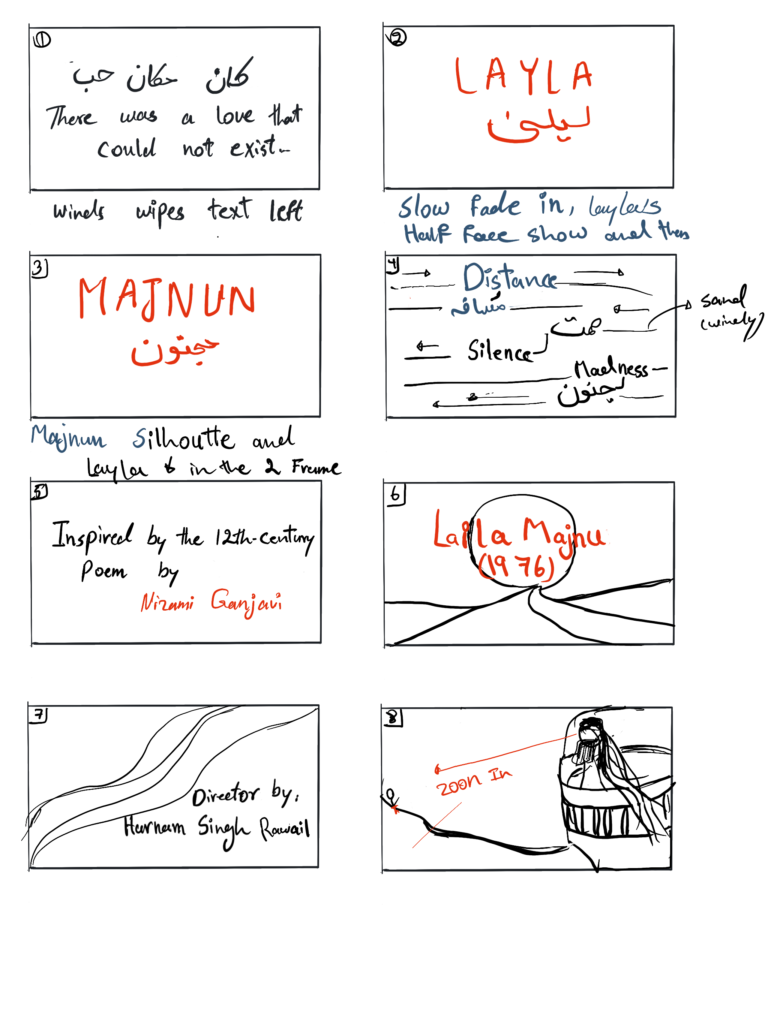
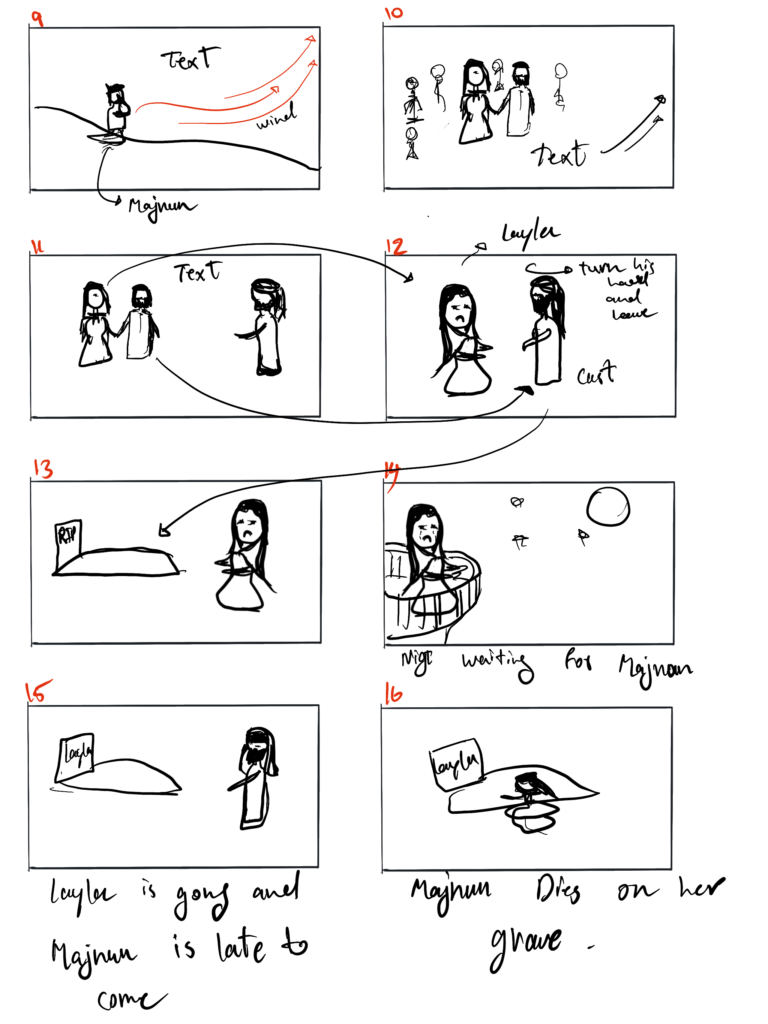
Storyboarding & Planning
Before moving into animation, I developed a detailed storyboard that mapped character reveals, scene transitions, typography placement, and narrative progression. This planning stage helped establish the pacing and visual flow of the sequence before production began.
Visual Development & Asset Creation
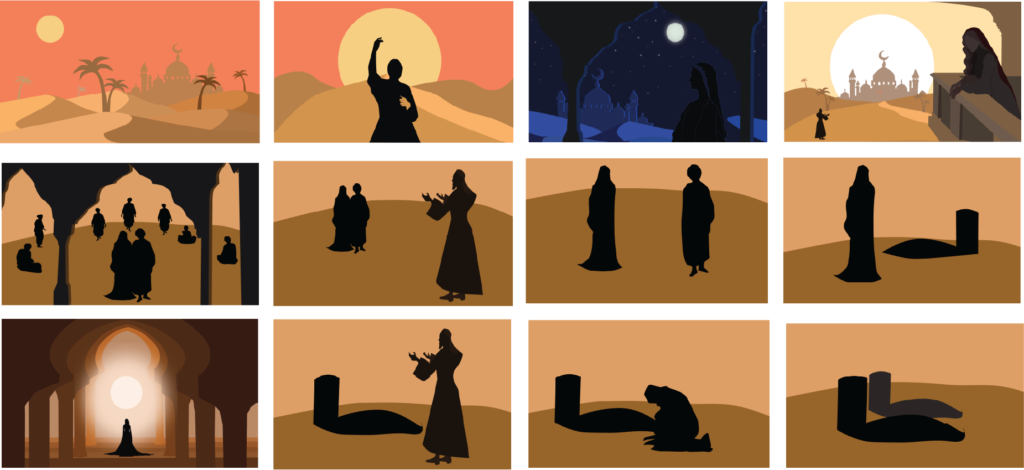
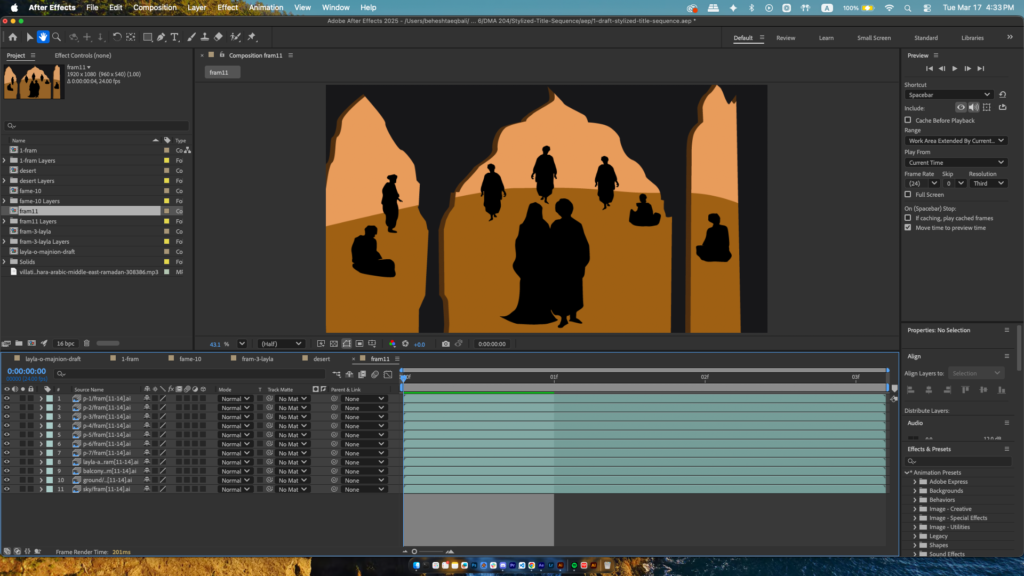
After establishing the visual direction, I designed all visual assets in Adobe Illustrator. Rather than relying on pre-made graphics, I created custom illustrations, environmental elements, character silhouettes, typography treatments, and scene components specifically for the sequence.
The assets were designed with animation in mind, allowing for smoother movement, clearer storytelling, and greater visual consistency throughout the project. Once completed, the assets were prepared and imported into Adobe After Effects for animation and sequencing.
Animation & Timing
The animation was created in Adobe After Effects with a strong focus on timing, pacing, and transitions. I carefully adjusted scene duration, character reveals, and motion rhythms to create a more natural and emotional viewing experience. Special attention was given to synchronizing movement with music and allowing key moments enough time to resonate with the audience.
Iteration & Problem Solving
Throughout production, I faced challenges including file loss, timing revisions, and export issues. Rebuilding portions of the project led to a more organized workflow and a deeper understanding of animation structure, layer management, and timing refinement.
Outcome
The final title sequence demonstrates how motion design can support narrative storytelling through visual pacing, typography, and cinematic composition. The project highlights my ability to move from concept and planning through animation and refinement while maintaining a clear creative direction.
Tools Used
- Adobe Illustrator
- Adobe After Effects
- Storyboarding
- Visual Research
And add to Skills Applied:
- Illustration
- Asset Development
- Motion Graphics
- Visual Storytelling
- Animation
- Typography
- Storyboarding
- Creative Direction